Twenty-Six Per Cent: Afghanistan's Hunger Is Outrunning Its Funding
A UN-backed assessment finds malnutrition rising across Afghanistan — an estimated 21.9 million people in need — while the country's 2026 Humanitarian Response Plan stands only 26 per cent funded.
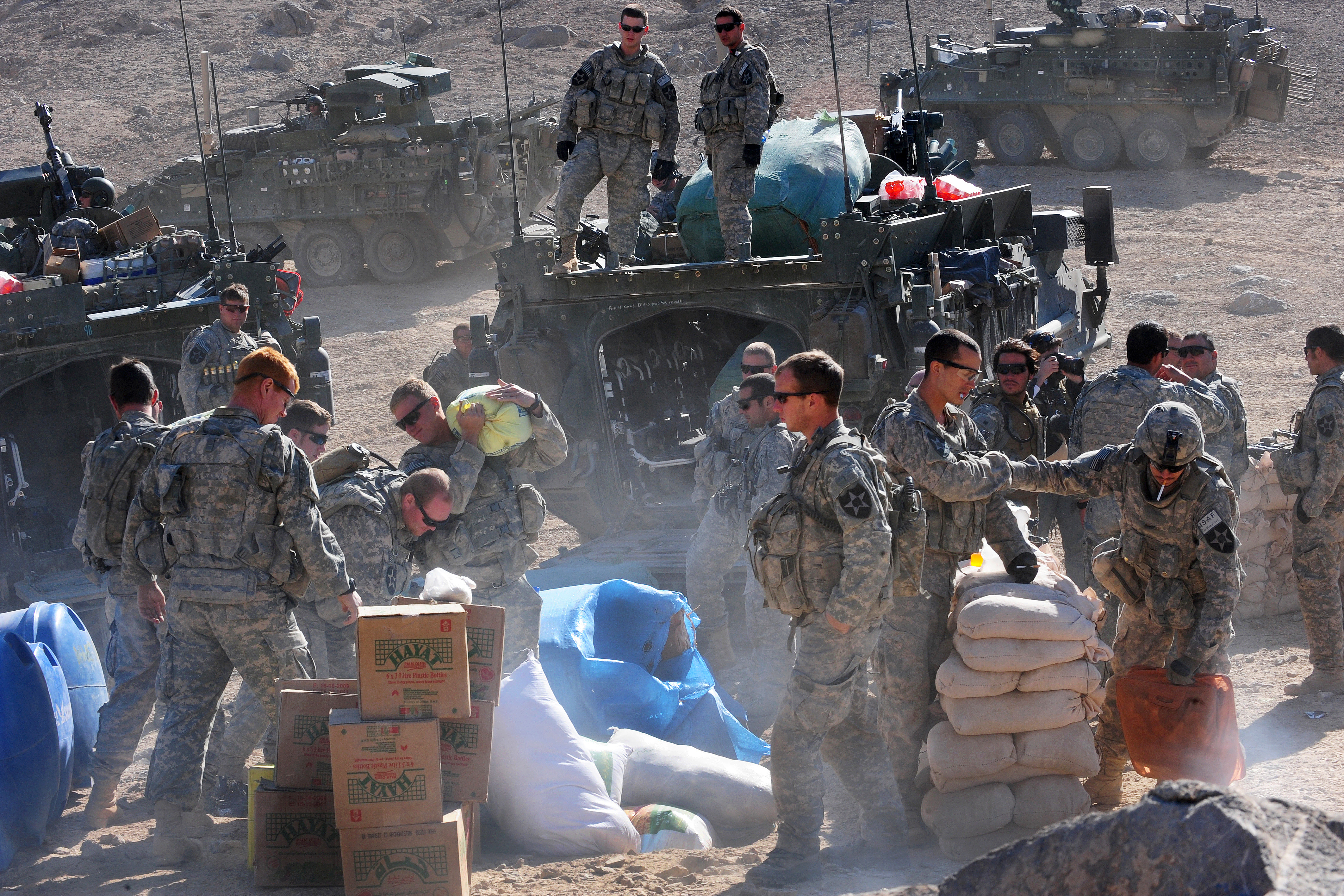
U.S. Army soldiers distribute humanitarian aid in Rajan Kala, Afghanistan. Photo: U.S. Army via DVIDS, public domain.
On 7 August, a UN-backed assessment by REACH found malnutrition rising across much of Afghanistan. Fifty-three per cent of surveyed communities reported an increase in malnutrition cases identified by health workers or clinics, and in 44 per cent of those communities the number of cases had doubled within the previous three months. The findings land as Afghanistan's 2026 Humanitarian Response Plan stands only 26 per cent funded — a level that, aid agencies warn, leaves the response unable to meet the needs it was designed to cover.
The assessment, conducted between 10 May and 7 June, drew on 12,854 key informants across all 401 districts of Afghanistan. It estimates that 21.9 million people — nearly 45 per cent of the population — require humanitarian assistance. The sharpest deteriorations were reported in Panjshir, where 89 per cent of communities described worsening malnutrition, followed by Faryab at 85 per cent and Laghman at 83 per cent.
Rising hunger is being driven less by open conflict than by a pile-up of economic and climate pressures. Fifty-five per cent of communities reported significant increases in food prices within the previous month, and 63 per cent described major, sudden price hikes in local markets. Families are running down their assets: in 87 per cent of communities, households were selling livestock more frequently because they lacked enough income or food. Sixty-five per cent of communities described food insecurity as a serious or very serious problem, a quarter said most residents had not had enough food in the past month, and in 60 per cent of communities children were working because families could not meet basic needs.
The survey also shows how need is becoming movement. Eighty per cent of communities cited financial hardship as the leading reason people had left their homes, ahead of unemployment and poverty at 79 per cent and food shortages at 75 per cent. The continued return of Afghan migrants from Iran and Pakistan adds to the strain: half of all communities reported receiving returnees, but 57 per cent said those arrivals had received no humanitarian assistance. Recent floods compounded the picture, with 15 per cent of communities reporting severe damage to homes — most heavily in Uruzgan, Samangan and Baghlan.
Access to healthcare is narrowing as needs grow. Seventy-seven per cent of communities named shortages of medicines and medical equipment as the biggest obstacle to care; nearly 60 per cent said medical treatment had become unaffordable; and 17 per cent said women could not safely or easily reach health facilities because of distance or movement restrictions.
Assistance itself is shrinking. Only 29 per cent of communities reported receiving humanitarian aid in the previous three months, down from 37 per cent in March, and 22 per cent said residents did not know how to access assistance at all. With the response plan barely a quarter funded — as KabulNow reported on 5 August, citing aid agencies — the assessment's authors warn that food insecurity and malnutrition are likely to worsen without additional international support.
Indonesian Summary
Laporan REACH yang didukung PBB (survei 10 Mei–7 Juni 2026, 12.854 informan di 401 distrik) menemukan malnutrisi meningkat di Afghanistan: 53% komunitas melaporkan kenaikan kasus, 44% di antaranya kasus berlipat ganda dalam tiga bulan. Sekitar 21,9 juta orang (hampir 45% populasi) membutuhkan bantuan kemanusiaan; kenaikan terparah di Panjshir (89%), Faryab (85%), dan Laghman (83%). Pemicunya kenaikan harga pangan, keluarga menjual ternak, dan pengungsian akibat kesulitan ekonomi (80% komunitas). Separuh komunitas menerima kembalinya migran dari Iran-Pakistan, tetapi 57% di antaranya tidak mendapat bantuan. Layanan kesehatan menyempit — 77% komunitas kekurangan obat. Bantuan justru menyusut: hanya 29% komunitas menerima bantuan (turun dari 37% di Maret), sementara Rencana Respons Kemanusiaan 2026 Afghanistan baru terdanai 26%.
Kabul Tribune, 7 August 2026: Malnutrition Rises Across Afghanistan, U.N.-Backed Report Says
KabulNow, 5 August 2026: Only 26 Percent of Afghanistan Humanitarian Response Plan Funded as Aid Agencies Warn of Deepening Crisis
Image: Wikimedia Commons, U.S. Army via DVIDS (public domain)
A response plan funded at 26 per cent is not a plan under pressure; it is a plan already missing three-quarters of its promise. Afghanistan's crisis is deepening without the drama of large-scale conflict — through prices, climate shocks, exhausted household assets and the quiet withdrawal of international funding. The gap between 21.9 million people assessed as needing help and a response resourced to reach only a fraction of them is the real shape of this emergency: not a sudden event, but a slow, accumulating failure of commitment.